Read the full article on the IUCN UNODC strategic partnership
The International Union for Conservation of Nature (IUCN) and the United Nations Office on Drugs and Crime (UNODC) launched a strategic partnership agreement to deepen cooperation in tackling crimes that affect the environment. The partnership aims to bridge the gap between conservation science and international criminal justice, addressing wildlife trafficking, illegal logging, fisheries crime, pollution and other environmental offenses, including those linked to transnational organised crimes.
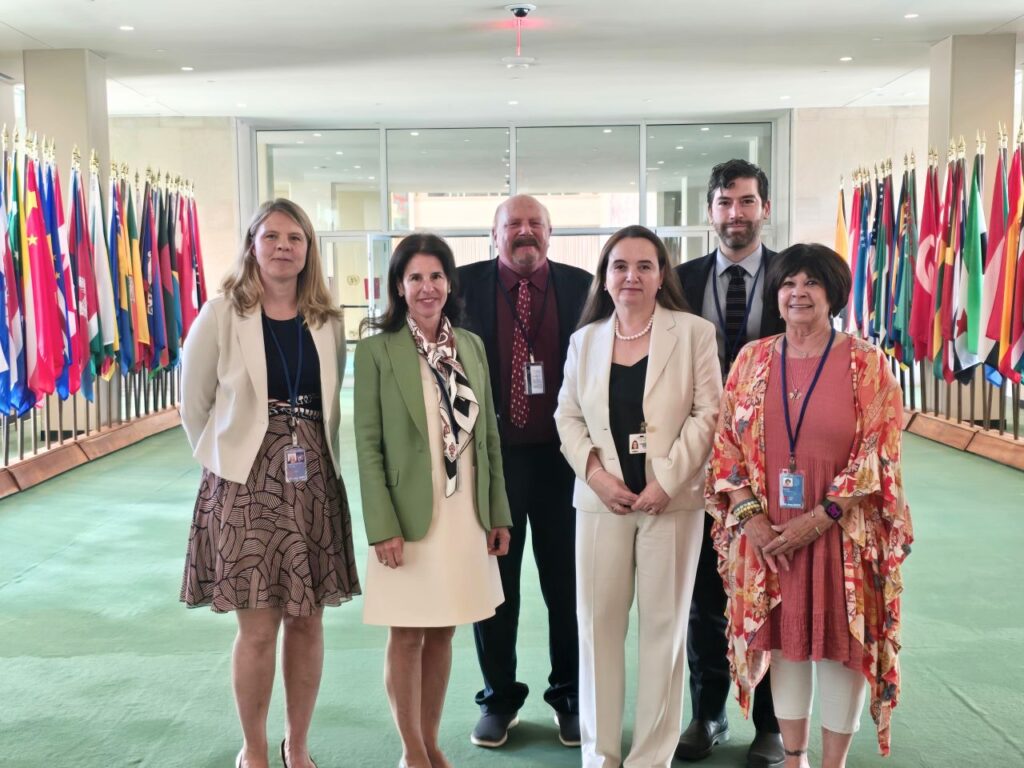
From left to right: Dr Sofie Sandström Jaffe (IUCN), Olivia Swaak-Goldman (WJC), Scott Hajost (National Whistleblowers Center), Director General Dr Grethel Aguilar (IUCN), Alfred DeGemmis (WCS), and Deborah Good (IUCN) at the United Nations High-Level Meeting on Crimes that Affect the Environment (CAE) at UN Headquarters in New York, June 8, 2026.
On June 8, IUCN Director General Dr. Grethel Aguilar joined world leaders and conservation experts at the United Nations High-Level Meeting on Crimes that Affect the Environment (CAE) at UN Headquarters in New York, where she delivered remarks alongside two prominent US IUCN Members, the Wildlife Conservation Society (WCS) and the Wildlife Justice Commission (WJC). US IUCN members have been critical partners in advancing IUCN’s agenda on environmental crime, bringing on-the-ground expertise, investigative capacity, and scientific rigor that have helped shape both global policy and enforcement approaches. Prior to the meeting, Dr. Aguilar met with US Members in attendance, underscoring the deep and ongoing collaboration between IUCN and its US Member organizations. Special recognition is due to IUCN UN Permanent Observer Sofie Sandstrom Jaffe, whose sustained efforts made IUCN’s strong presence at the meeting possible.
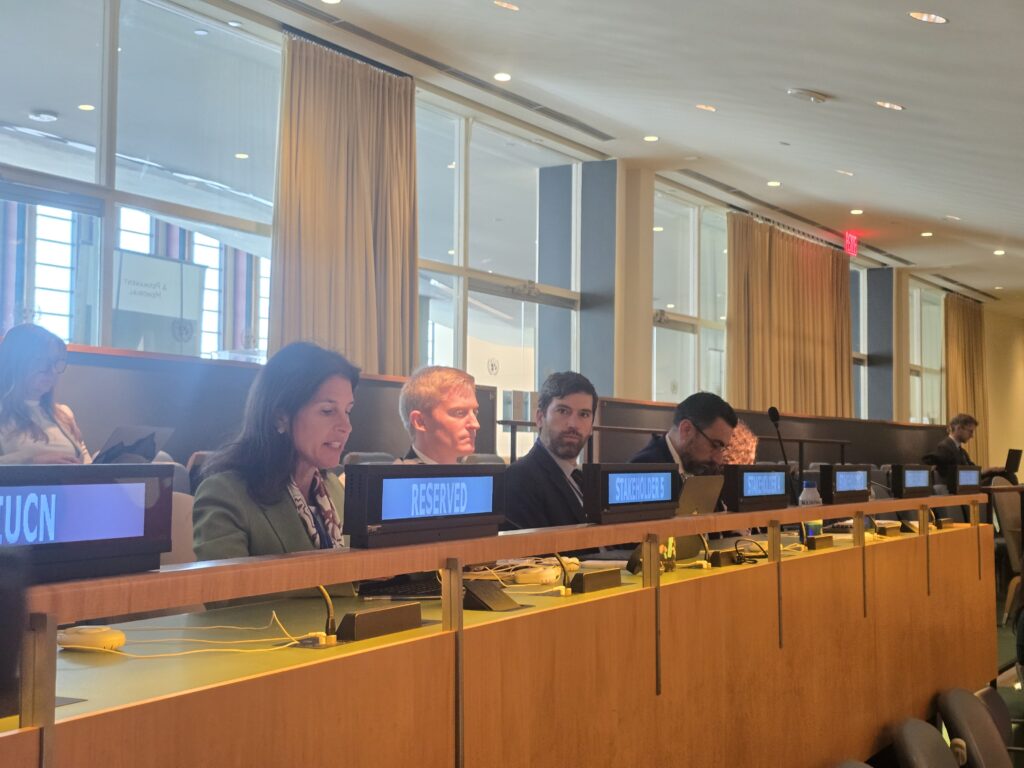
Olivia Swaak-Goldman, Executive Director of the Wildlife Justice Commission delivering remarks.
The New York convening also marked a landmark moment for global conservation governance: IUCN and the United Nations Office on Drugs and Crime (UNODC) launched a strategic partnership agreement to deepen cooperation in tackling crimes that affect the environment, aiming to bridge the gap between conservation science and international criminal justice – addressing wildlife trafficking, illegal logging, fisheries crime, pollution, and other environmental offenses, including those linked to transnational organized crime. Under a joint workplan, the two organizations will collaborate on international policy and legal frameworks, support Member States, enhance criminal justice and law enforcement capacity, and pursue joint data sharing and research. As Dr. Aguilar stated at the signing, this partnership reflects the growing recognition that environmental crime is one of the most significant threats to biodiversity and human wellbeing, and that meeting this challenge demands exactly the kind of science-to-justice collaboration that IUCN and its US Members have long championed.
Please find here the oral statements delivered on June 8th by the Wildlife Justice Commission and the Wildlife Conservation Society.