Mangroves serve as a critical barrier against storm surges and erosion, protecting lives and infrastructure. They also enhance water quality through root filtration and play a vital role in supporting ecosystems both above and below the water’s surface, providing nurseries and hunting grounds for fish, birds, and other species. However, this invaluable ecosystem faces immense threats, with over half of the world’s mangrove ecosystems at risk of collapse by 2050, according to a recent IUCN global assessment.
Recognizing the vital role of these coastal ecosystems, the Khaled bin Sultan Living Oceans Foundation, an IUCN US Member, launched its Mangrove Education and Restoration Program. For over a decade, the program has empowered students to understand and take action in restoring these critical ecosystems.
The program partners with local institutions to teach students and teachers about the ecological importance of mangrove forests. Students get hands-on experience, getting involved in mangrove restoration efforts. Starting in Jamaica with the Jamaica Awareness of Mangroves in Nature (J.A.M.I.N.) initiative, the program expanded to the Bahamas Awareness of Mangroves (B.A.M.). Each program has three phases including professional development opportunities, classroom learning, and field-based activities.
Through this initiative, high school students engage in growing mangroves, primarily red mangrove seedlings, and conduct scientific experiments to deepen their understanding of the species and effective conservation methods.
Alongside the educational initiatives, the Mangrove Education and Restoration Program has designed a Mangrove Ecology Curriculum to introduce students to the importance of mangrove through STEAM education methods. Development of the programs has occurred with the help of the University of the West Indies Discovery Bay Marine Lab in Jamaica and the Friends of the Environment in the Bahamas.
The Living Oceans Foundation has evaluated the program as a success, inspiring students to take action in conservation management and sparking a deeper interest in mangrove ecosystems. Graduates of the program often continue their advocacy work professionally, making a lasting impact on conservation efforts.
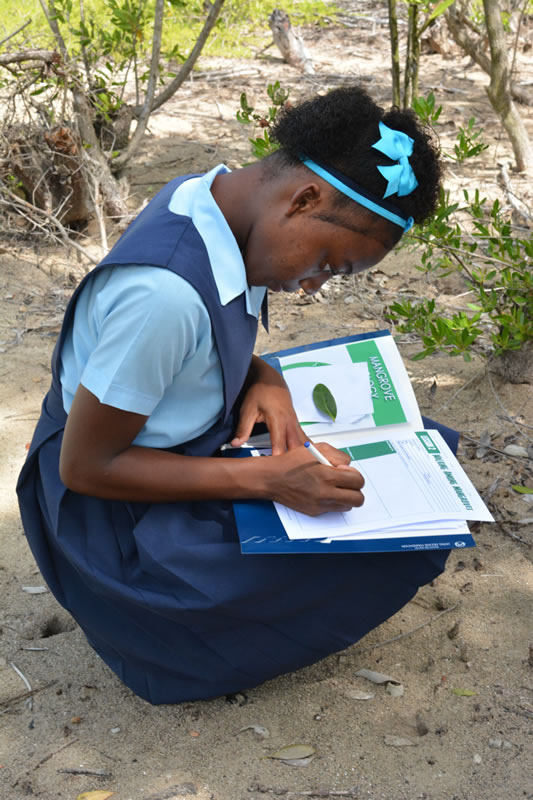
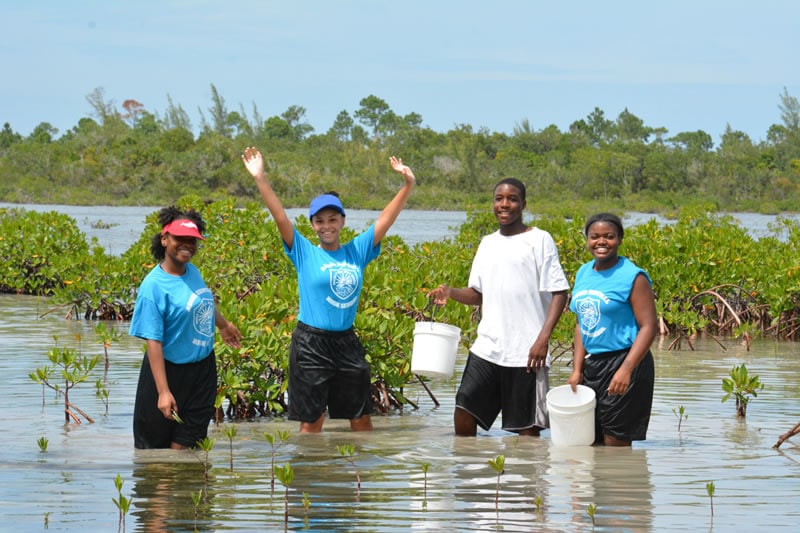
Image 1: A student answers questions on her activity worksheet while on a field trip to a mangrove forest. [Khaled bin Sultan Living Oceans Foundation, J.A.M.I.N.]; Image 2: Students from Abaco Central High School collect mangrove leaves and propagules while participating in the Bahamian Awareness of Mangrove (B.A.M.) Program [Khaled bin Sultan Living Oceans Foundation, B.A.M.]